Material: Corten Steel, Bronze, Poly-vinyl composite
Dimensions: 150 cm x 160 cm M x 100 cm
Commissioner: City of Hamilton, Ontario
Location: Pipeline Trail Park (intersection of Cannon St East and Garside St )
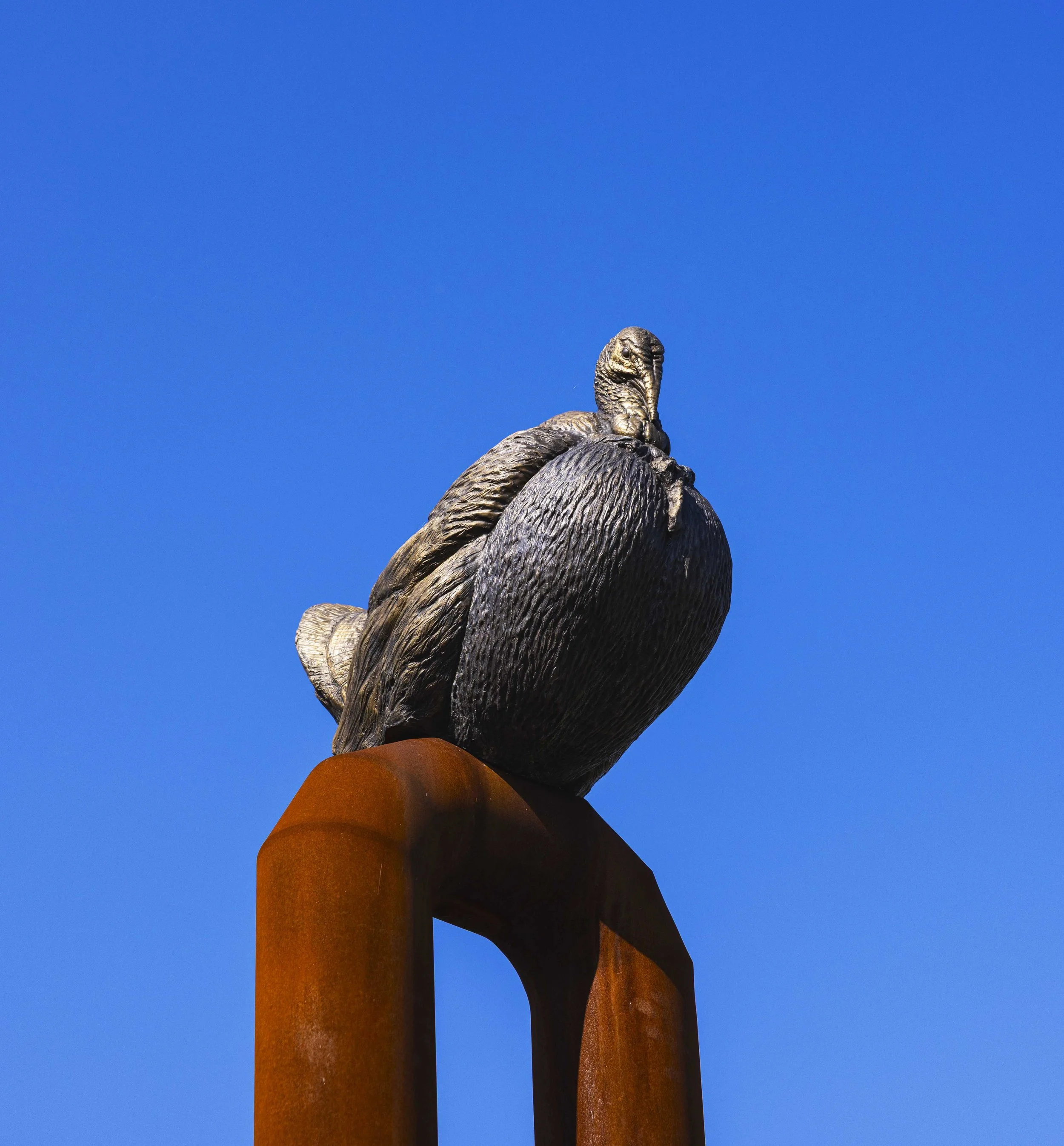
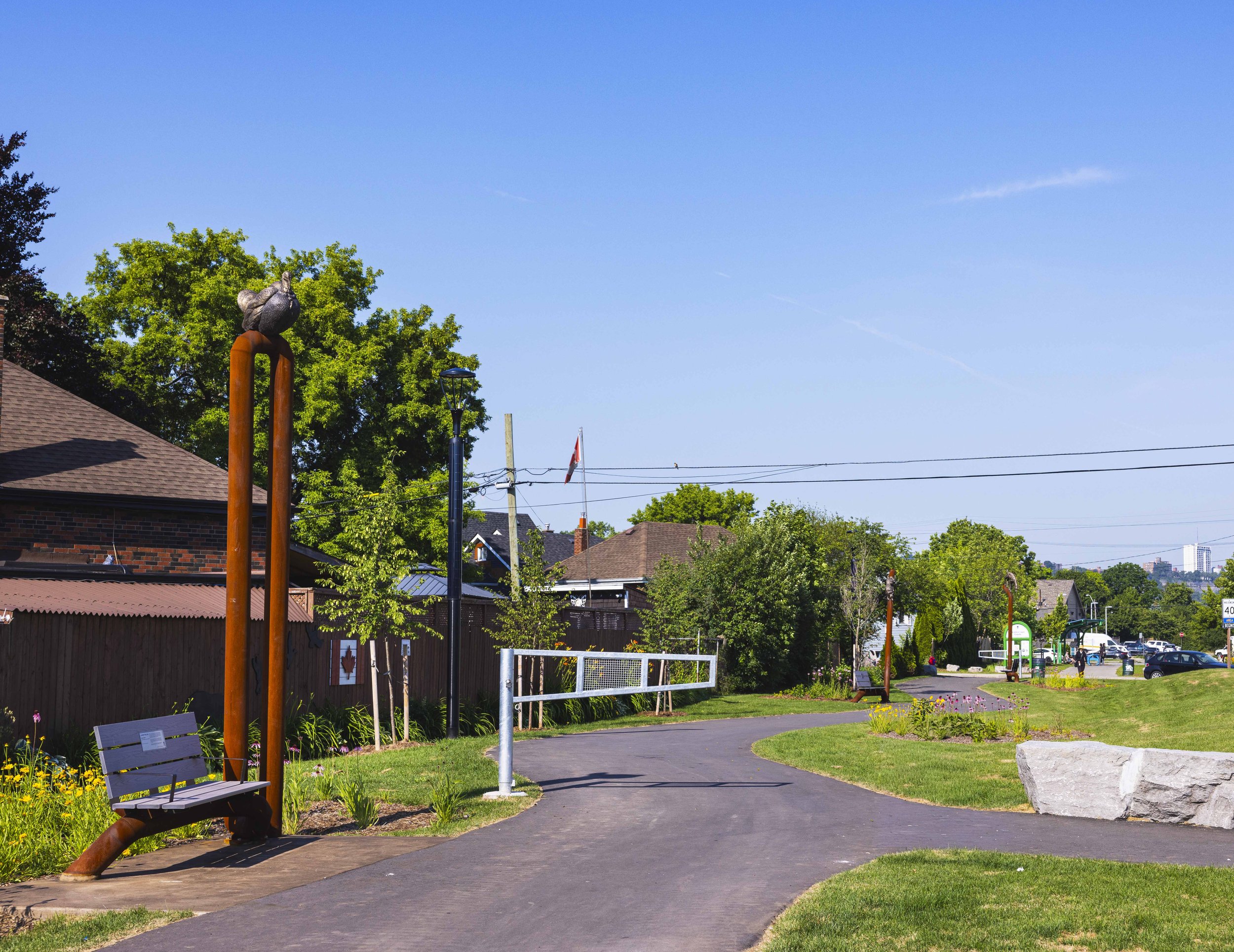
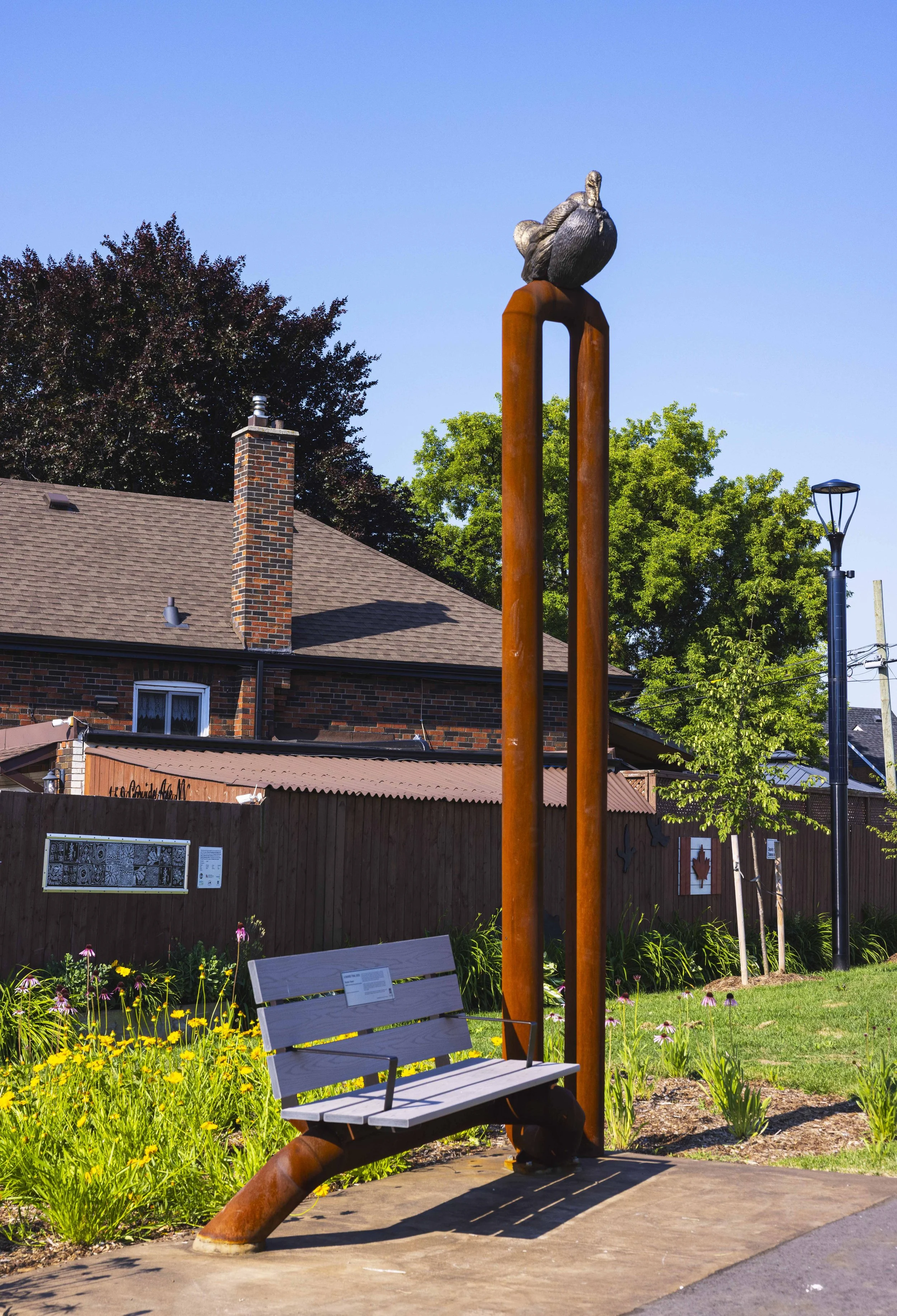
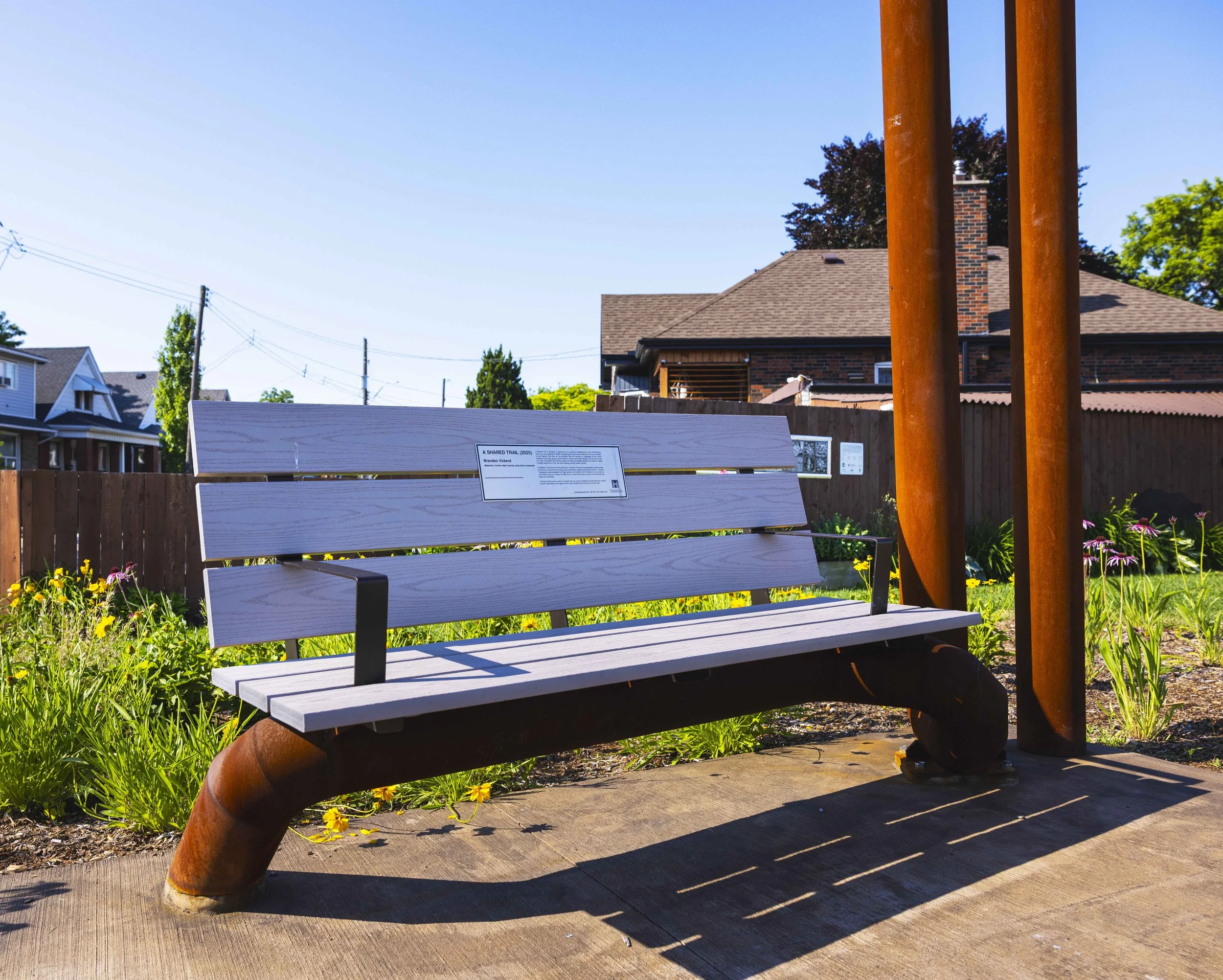
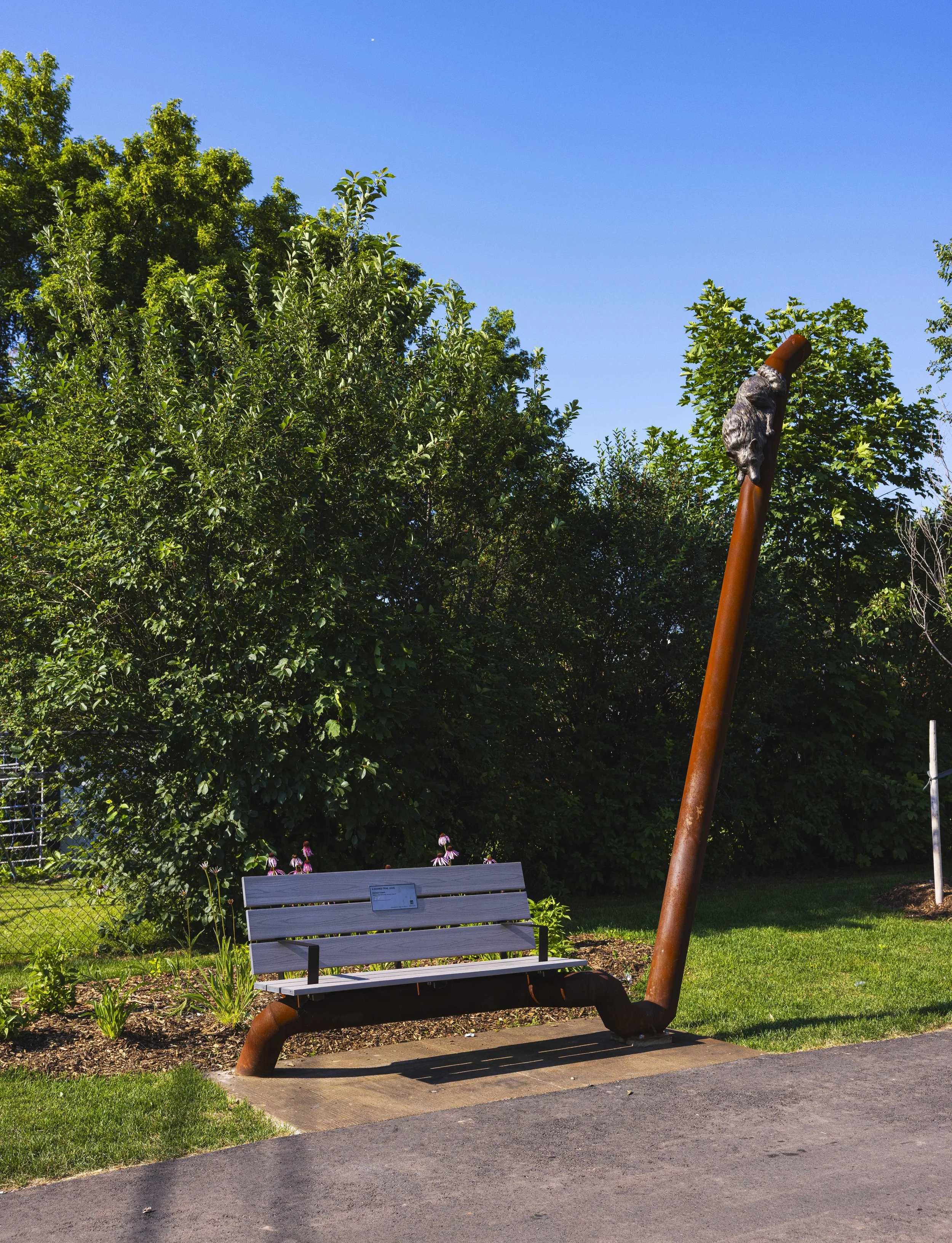
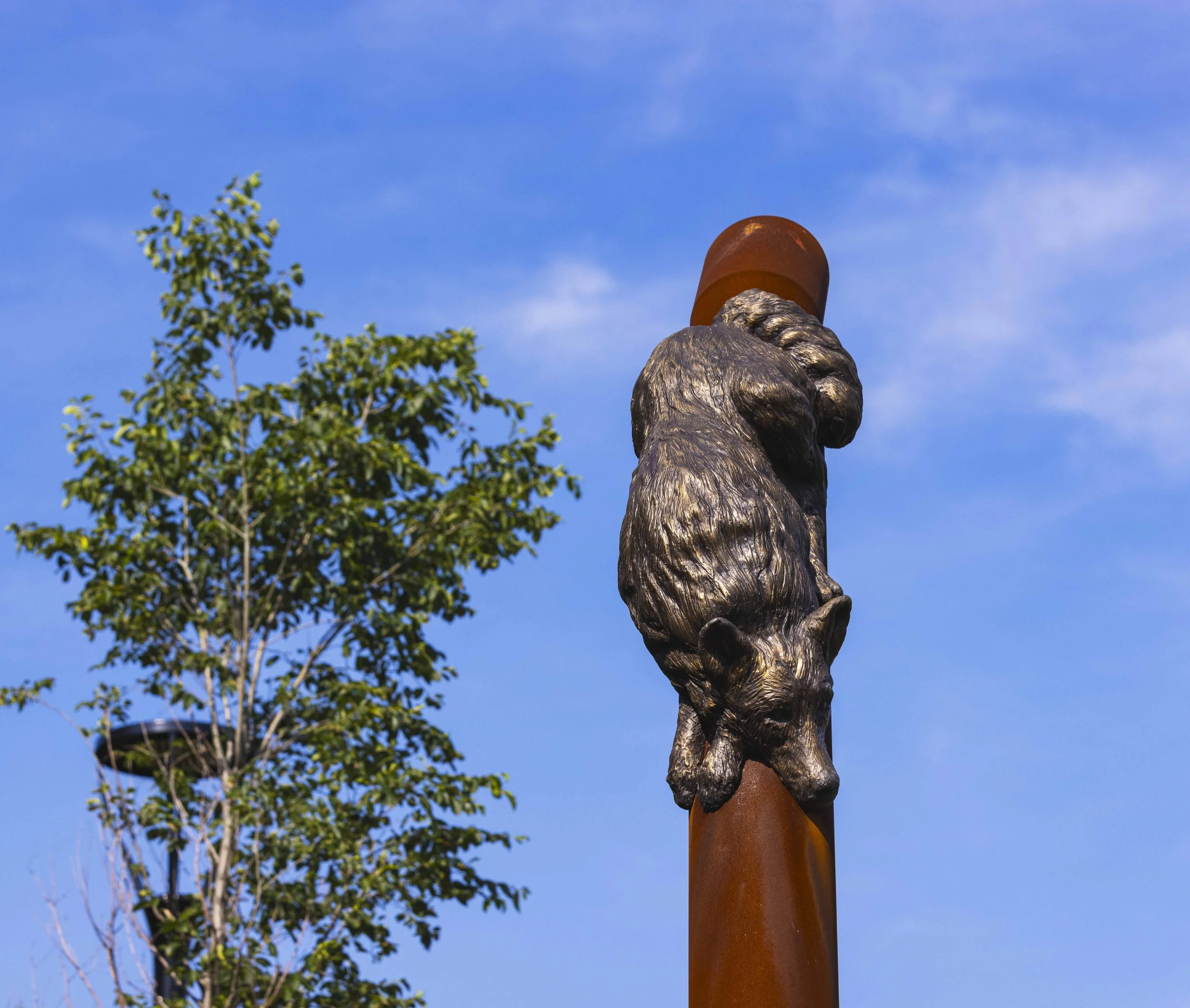
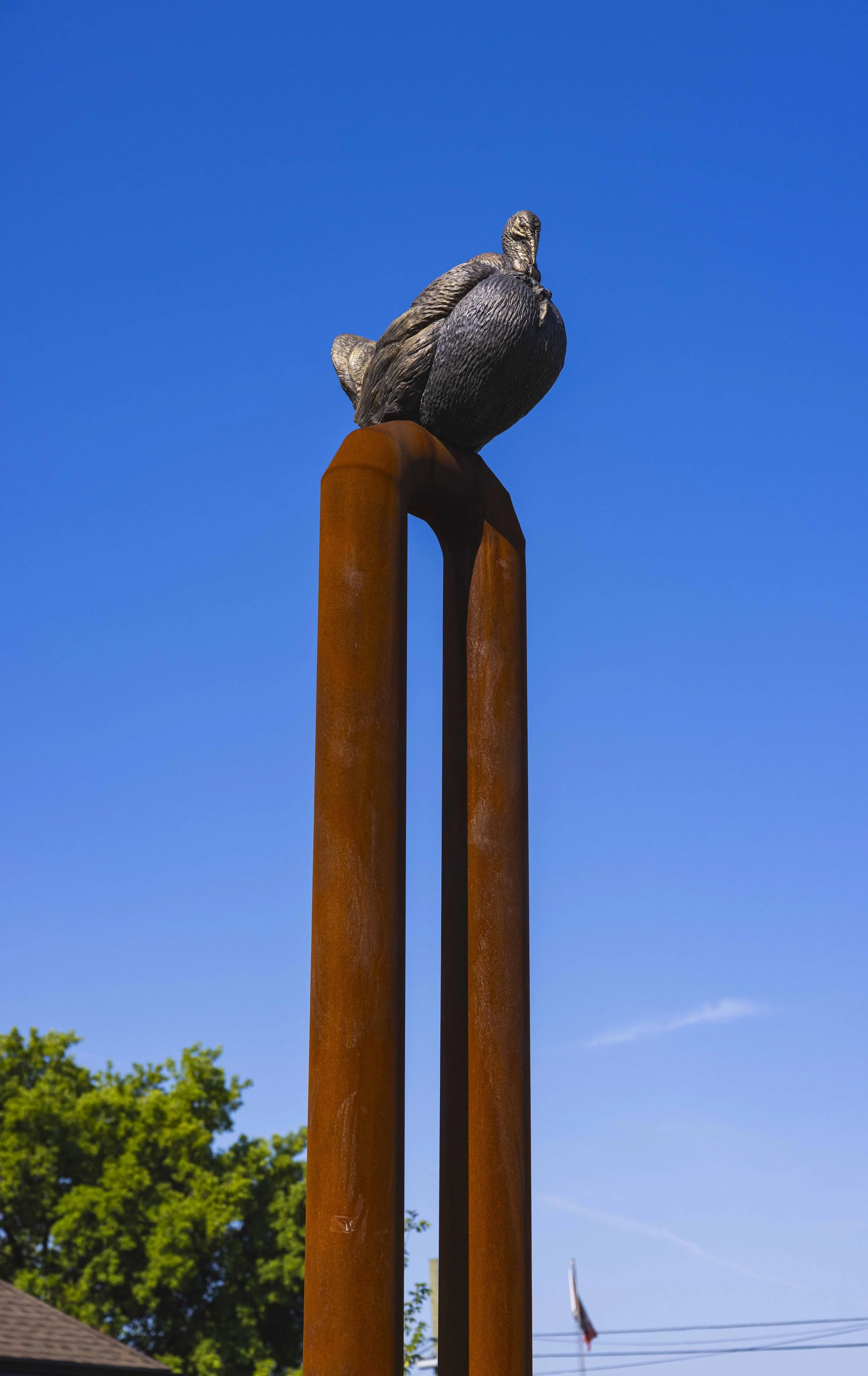
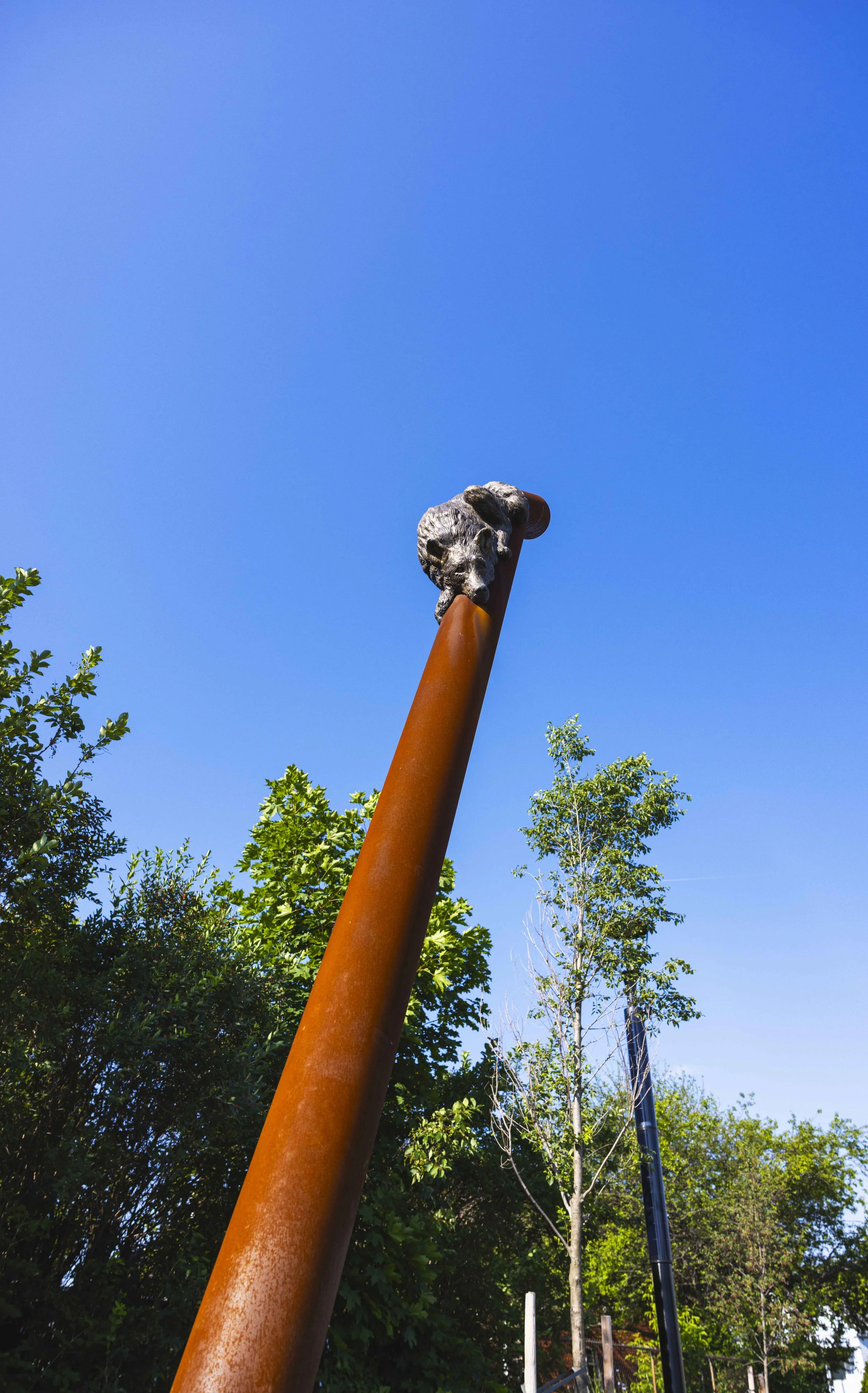
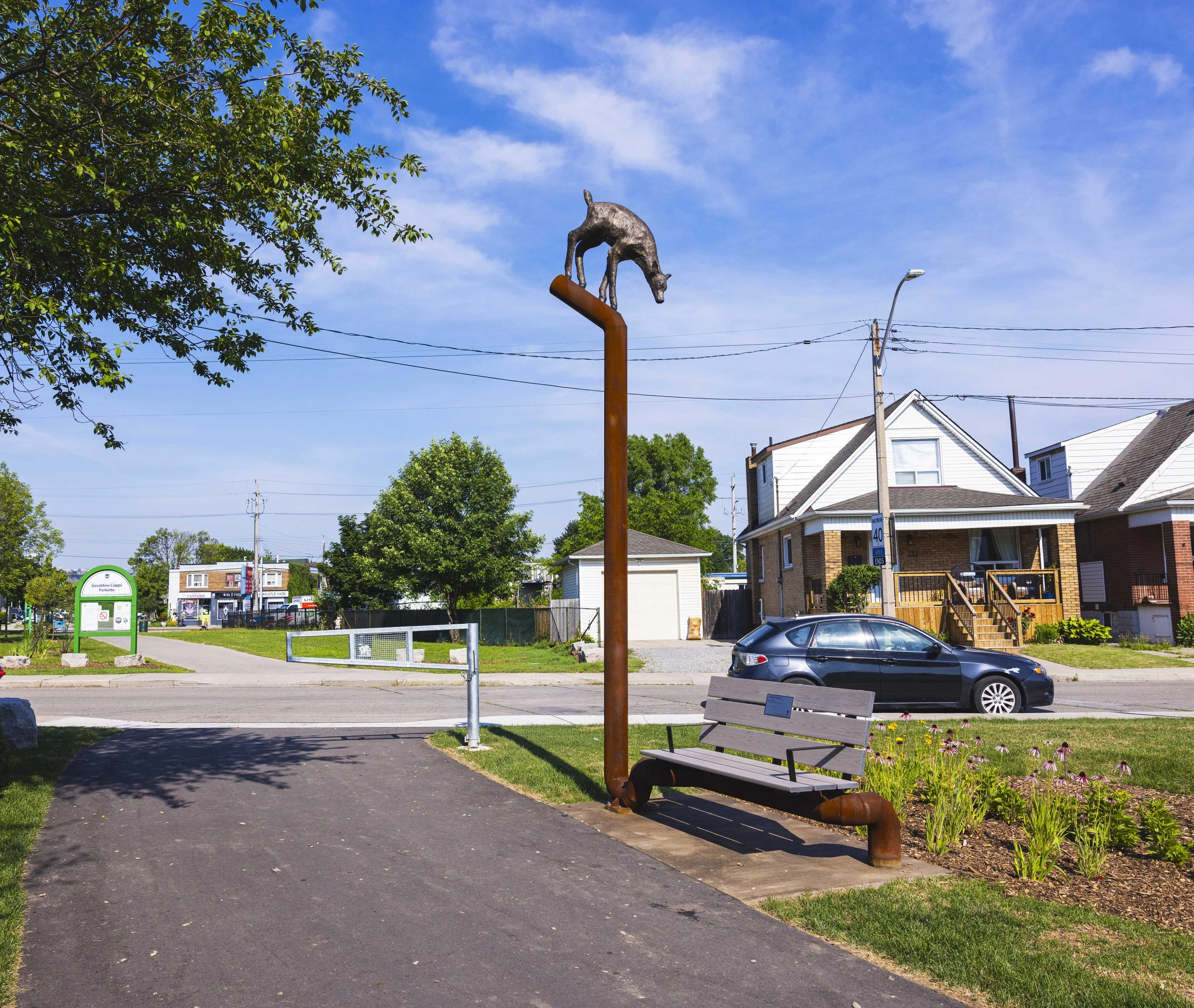
A Shared Trail consists of three separate sculpture/bench combinations, each featuring the form of a wild animal dynamically perched atop a functional bench. The animals depicted in A Shared Trail are a wild turkey, a whitetail deer, and a coyote, all of which are native to Hamilton’s east end. Each animal is fabricated in bronze, and the benches are fabricated from Corten steel pipe, intended to mimic the industrial material that forms the water pipeline running below the trail corridor. The three benches are evenly dispersed through the park space providing pedestrians with multiple opportunities to rest and relax.
A Shared Trail challenges our perception of nature by highlighting the urban environment as a space shared with wild animals. The reality of our expanding cityscapes correlating to the shrinking wilderness that houses these animals has resulted in the sharing of our urban spaces with creatures that we assume are better suited for the forest. These animals inhabit our city stealthily, rarely seen, and when we do come across them, we are often startled to remember that we share our community spaces. Most urban dwellers envision wild animals living in idealistic forest and/or grasslands, a perception that has been reinforced by pop culture representations such as the classic public service announcement Hinterland Who’s Who and Discovery Channel documentaries. However, biologists now argue that the man-made transit corridors crisscrossing our urban centers, such as Hamilton’s Pipeline Trail, operate as migration and travel corridors for wildlife. These transit corridors inadvertently provide a secure and direct route of travel for wild animals, free from dangerous car traffic and threatening human interaction. A Shared Trail playfully acknowledges that the migration and mobility that the Pipeline Trail provides is not limited to human travelers, but also has an unintended positive impact on the animals that share our landscape.
A Shared Trail asks the viewer to consider the non-animal inhabitants of east Hamilton, as well as their relationship to the legacy of the urban infrastructure that our city is built upon. It is a future oriented artwork that celebrates cultural symbolism, foregrounds the role of nature in Hamilton’s identity, and the role of the Pipeline Trail in the community
Photo Credit: Geoff Fitzgerald
Material: Corten Steel, Bronze, Poly-vinyl composite
Dimensions: 150 cm x 160 cm M x 100 cm
Commissioner: City of Hamilton, Ontario
Location: Pipeline Trail Park (intersection of Cannon St East and Garside St )
A Shared Trail consists of three separate sculpture/bench combinations, each featuring the form of a wild animal dynamically perched atop a functional bench. The animals depicted in A Shared Trail are a wild turkey, a whitetail deer, and a coyote, all of which are native to Hamilton’s east end. Each animal is fabricated in bronze, and the benches are fabricated from Corten steel pipe, intended to mimic the industrial material that forms the water pipeline running below the trail corridor. The three benches are evenly dispersed through the park space providing pedestrians with multiple opportunities to rest and relax.
A Shared Trail challenges our perception of nature by highlighting the urban environment as a space shared with wild animals. The reality of our expanding cityscapes correlating to the shrinking wilderness that houses these animals has resulted in the sharing of our urban spaces with creatures that we assume are better suited for the forest. These animals inhabit our city stealthily, rarely seen, and when we do come across them, we are often startled to remember that we share our community spaces. Most urban dwellers envision wild animals living in idealistic forest and/or grasslands, a perception that has been reinforced by pop culture representations such as the classic public service announcement Hinterland Who’s Who and Discovery Channel documentaries. However, biologists now argue that the man-made transit corridors crisscrossing our urban centers, such as Hamilton’s Pipeline Trail, operate as migration and travel corridors for wildlife. These transit corridors inadvertently provide a secure and direct route of travel for wild animals, free from dangerous car traffic and threatening human interaction. A Shared Trail playfully acknowledges that the migration and mobility that the Pipeline Trail provides is not limited to human travelers, but also has an unintended positive impact on the animals that share our landscape.
A Shared Trail asks the viewer to consider the non-animal inhabitants of east Hamilton, as well as their relationship to the legacy of the urban infrastructure that our city is built upon. It is a future oriented artwork that celebrates cultural symbolism, foregrounds the role of nature in Hamilton’s identity, and the role of the Pipeline Trail in the community
Photo Credit: Geoff Fitzgerald